

Cost of Attendance Transparency Project
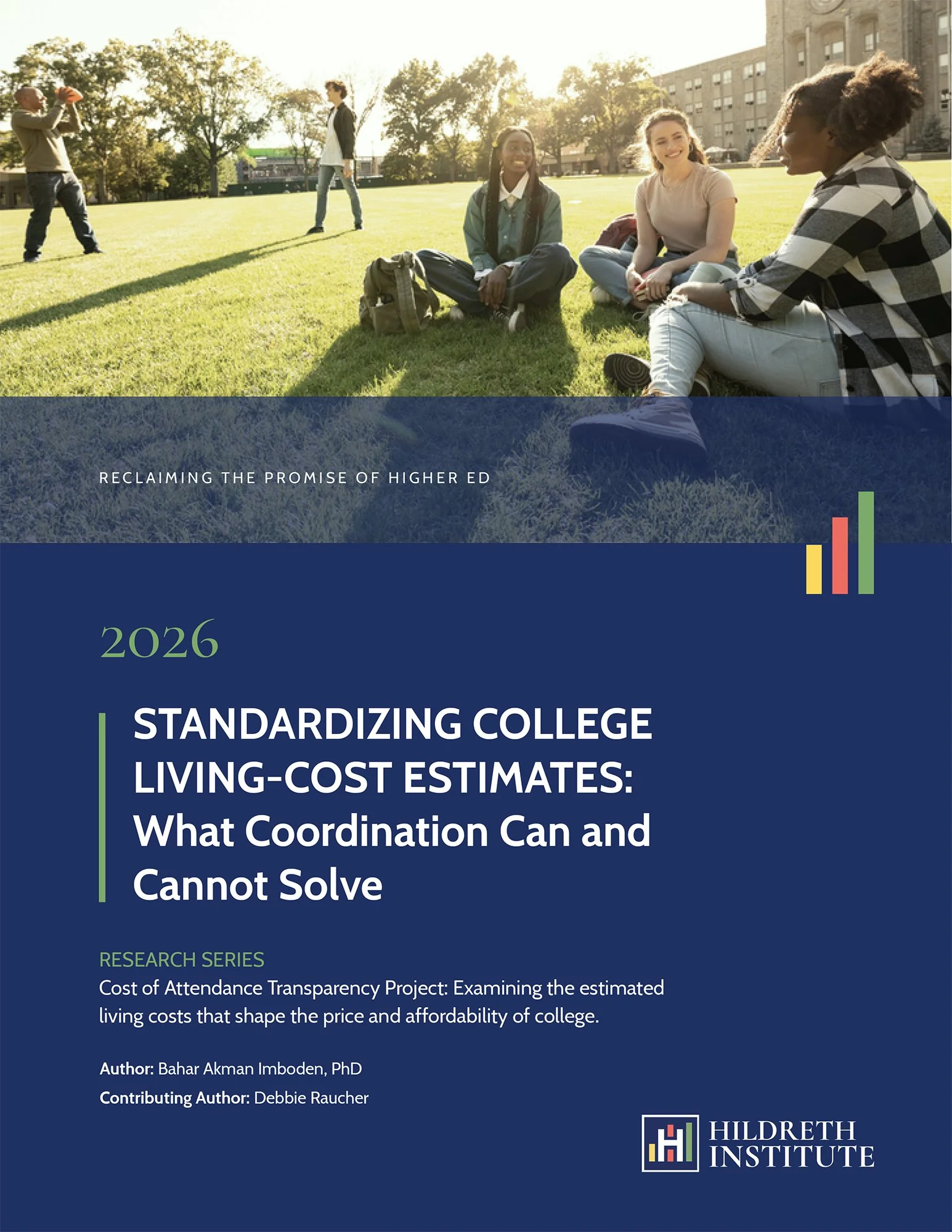
STANDARDIZING COLLEGE LIVING COST ESTIMATES: What Coordination Can and Cannot Solve
Executive Summary
The quantitative analysis revealed a second striking pattern alongside wide variation: institutions sometimes report identical or tightly clustered allowances even when they operate in different local cost markets. This report looks behind those patterns and finds that coordination by states, systems, associations, and other intermediaries appears more widespread than formal policy scans alone suggest. It examines how that coordination works in practice, why it emerges, and what different approaches can—and cannot—solve.
What the Research Shows
Standardization is not a yes-or-no choice. States and systems can coordinate anything from final dollar amounts to data sources, methodologies, definitions, processes, and disclosure requirements, while preserving different levels of institutional discretion. These approaches can increase consistency and reduce administrative burden, but greater consistency does not by itself produce greater accuracy—particularly when a common amount is applied across places with different living costs. Importantly, among public institutions, the amount-standardizing approaches identified in our national data are substantially less likely to produce allowances below the benchmark and more likely to produce allowances above it than non-standardized approaches. This does not establish that standardization causes higher estimates—or that above-benchmark estimates are necessarily more accurate—but shows how shared assumptions can be amplified across institutions.
Why It Matters
Different goals call for different forms of coordination. The cases suggest that policy design should begin with the problem to be solved and distinguish between what benefits from being shared and what needs to remain locally responsive. The cases point toward an important distinction: definitions, evidence, and methodologies may benefit from greater consistency, while the resulting dollar amounts may still need to vary with local costs and student circumstances. Regular methodological review and clear pathways for institutional and individual adjustments are also important safeguards against reproducing poorly calibrated assumptions at scale.

Join Our Live COA Webinar!
Wednesday, October 28th, 1PM - 2PM ET
Estimating Student Need: Findings from the Cost of Attendance Transparency Project

View Our Interactive Dashboard
Explore key patterns in college living-cost estimates and interact with data collected from years of research.

Press Release
New Roadmap Charts Bold Path for Equitable Public Higher Education in Massachusetts
COA Report Series
This series will be published in phases as the Reports are released. Please check back for updates.


1


2

REPORT
LIVING-COST ESTIMATES: How Published Allowances Compare with Local Costs
Coming Soon


4
REPORT
APPENDICES & SUPPORTING MATERIALS: Additional Context Here if Applicable to this Report
Coming Soon

5
REPORT
POLICY FRAMEWORK: Additional Context Here if Applicable to this Report
Coming Soon

DASHBOARD
View Our Interactive Dashboard
Explore key patterns in college living-cost estimates and interact with data collected from years of research.
Subscribe for News
College affordability starts with greater transparency and accuracy in how COA is set. Realistic living costs are crucial—and a high-impact opportunity for change. Subscribe for the latest news.
How You Make an Impact
Support the work: Help build independent evidence on one of college’s largest, least-measured costs.
Partner with us: Collaborate on research, policy, pilots, or implementation.
Use our work: Strengthen COA accuracy, transparency, accountability, and policy.
Amplify and share: Cite and share the research to elevate living costs in affordability conversations.